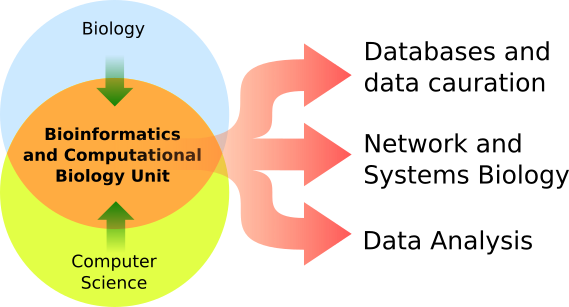
 Modern biology is increasingly reliant on the algorithmic and conceptual tools of computer science and electrical engineering. A major factor is the unprecedented growth in the size and scope of biological data sets, including multi-species genomic data, databases of polymorphic variants, databases of protein structure and RNA structure, gene expression data, biochemical measurements from large-scale gene knockout experiments and biomedical data. Representing, manipulating and integrating such data requires an appreciation of ideas from diverse areas of EECS such as databases, algorithms, artificial intelligence, graphics, signal processing and image processing. Reasoning about the underlying phenomena that give rise to such data require the systems-level thinking that is the underpinning of areas such as control theory, information theory and statistical machine learning. Ideas from circuit design and nanotechnology play key roles in the design of new biological sensors and actuators. Students in EECS who work on biological problems obtain a cross-disciplinary education in EECS and biology, and often play key roles in collaborative research projects involving biology faculty and students. It is also important to note that the research efforts in biosystems and computational biology in EECS are part of a larger, campus-wide initiative in computational biology. Indeed, many EECS faculty are members of the Center for Computational Biology (CCB).
Topics
Neural systems
- Sensory motor control. Vision. Audition. Biomimetics. Brain-machine interfaces. Computational neuroscience.
Biomedical systems
- Sensors. Healthcare systems. Physiological modeling. Medical imaging and bioimage analysis.
Direct Electron-Mediated Control of Hybrid Multi-Cellular Robots
Mathematics and Synthesis of a Contact-Mediated Multicellular Patterning System
Neural dust: miniature, wireless, implantable system for neuro-modulation (ND)
Programmed Cellular Self-Optimization to Tailor Antibiotic Delivery
Theory-based Construction of Synthetic Circuit Robustness through a Parts to Circuit Approach
Cancer Tumor Genomics: Fighting the Big C with the Big D
Electrical Near-Field Imager with Sub-Cellular Resolution at Millimeter-wave Frequencies
